BNB $608,06 +0,27%
XRP $1,35 +0,07%
ETH $2 260,75 +0,55%
BTC $73 113,11 +0,01%
BNB $608,06 +0,27%
XRP $1,35 +0,07%
ETH $2 260,75 +0,55%
BTC $73 113,11 +0,01%
URGENT

Actualités & Analyses Bitcoin

Du simple livre blanc expérimental à une classe d'actifs pesant des milliers de milliards, le Bitcoin ne cesse de transformer la finance mondiale. Notre rédaction couvre chaque étape majeure du BTC depuis 2017 — halvings, approbations d'ETF, vagues d'adoption institutionnelle et batailles réglementaires. Que vous suiviez le cours quotidien ou les tendances de fond, retrouvez ici toute notre couverture Bitcoin.

4 513 articles publiés

Dernières actualités

Voir tout →

Prix & Analyse du Marché

Mouvements de prix, activité des whales et analyse technique.

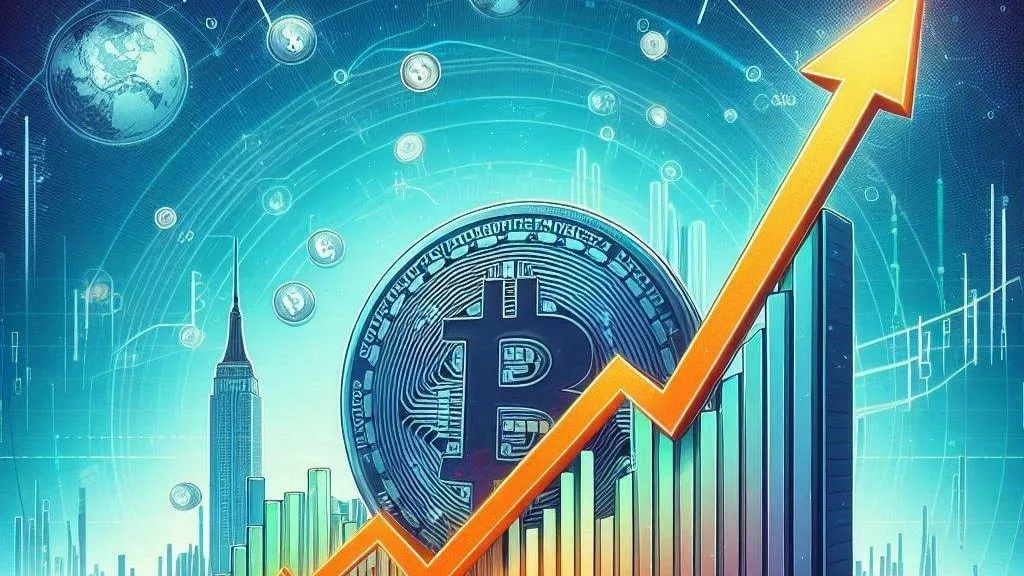
Bitcoin (BTC) is trading near its all-time high of $123,218, but something unusual is happening behind the scenes. Despite the impressive price levels, there’s little evidence of widespread selling by large investors. New on-chain data is now raising eyebrows, as it shows a significant shift in behavior compared to previous bull markets. During past rallies—especially in 2017 and 2021—Bitcoin’s climb toward new highs was typically followed by a sharp rise in BTC flowing into exchanges. This usually signaled profit-taking by whales and institutional players, often leading to steep corrections. However, in 2025, the pattern is breaking. According to a recent analysis shared on CryptoQuant by contributor Arab Chain, the Inter-Exchange Flow Pulse (IFP) indicator is not showing the expected surge in exchange deposits. Instead, large holders appear to be keeping their coins off exchanges, despite BTC hovering around record highs. This could mean one thing: confidence in further upside remains strong. The IFP is a metric that tracks the movement of Bitcoin between centralized exchanges. A rising IFP often suggests that holders are preparing to sell, either for profit or to take advantage of arbitrage opportunities. A declining or flat IFP, on the other hand, usually signals that investors are choosing to hold onto their assets. So far in 2025, the IFP spiked earlier in the year but has since declined. This suggests that many investors who moved coins early in the rally are no longer actively looking to sell. That’s a major contrast to the final stages of the 2017 and 2021 cycles, where high IFP readings coincided with major sell-offs and sharp price declines. Arab Chain notes that this behavior is significant. “This indicates high confidence in the uptrend so far and partly explains why the price has continued to rise without any clear selling pressure,” they wrote. The implication is that unless there is a sharp rise in exchange flows, Bitcoin may have room to continue its rally. However, not everyone is staying on the sidelines. Bitcoin miners, who are constantly balancing operational costs with market conditions, have begun increasing their selling activity. On July 15, miner outflows surged to 16,000 BTC in a single day—the highest since April 7. This shows that while long-term holders remain confident, those who rely on regular liquidity are using the current price levels to lock in gains. Even so, this miner selling has yet to dampen the broader bullish mood. Many investors and analysts believe that this cycle has a different structure than previous ones, thanks in part to stronger institutional adoption and new investment vehicles like Bitcoin exchange-traded funds (ETFs). These funds continue to attract interest from wealth managers, family offices, and even pension funds, which could provide more price stability compared to retail-driven cycles. Still, there are risks. If Bitcoin’s IFP suddenly starts to rise again, that could signal the start of renewed selling pressure. In that case, a broader correction could follow. Analysts are closely watching for any shift in this metric as a potential warning sign. Another area of focus is the key support levels for BTC. According to a separate analysis by CryptoQuant contributor Chairman Lee, Bitcoin must hold critical levels to maintain its momentum. The exact support zone wasn’t specified in the post, but analysts across the board have identified the $110,000–$115,000 range as a key region. If BTC falls below this band, it could open the door for a deeper pullback. At the time of writing, Bitcoin is trading at $117,529, down about 1.4% over the past 24 hours. Despite this slight dip, the mood among many market participants remains optimistic. Sentiment is being reinforced by the continued lack of mainstream hype, something that typically signals the later stages of a bull market. Unlike previous cycles that were marked by media frenzy and retail mania, this rally feels more subdued, possibly indicating that the current move still has room to grow. In conclusion, while Bitcoin’s price is already impressive, the quiet behavior of investors may be the real story. With fewer coins moving onto exchanges and a general trend of accumulation, the 2025 rally is defying expectations. As long as the Inter-Exchange Flow Pulse remains low and support levels hold, Bitcoin could be setting up for further gains in the months ahead. But as always, market participants would be wise to keep an eye on the data—because in crypto, things can change fast.

Juil 25, 2025 · 3 min de lecture

Minage & Réseau

Hash rate, difficulté de minage et mises à jour du réseau.
Régulation & ETF

Décisions de la SEC, régulation mondiale et ETF Bitcoin.
📚

Envie de comprendre les bases ?

What is Bitcoin? Bitcoin is the world’s first-ever cryptocurrency that was laun…

What is Bitcoin? →

Questions fréquentes

Qu'est-ce qui influence le prix du Bitcoin ?

Le prix du Bitcoin dépend de l'offre et la demande, notamment les cycles de halving qui réduisent l'émission tous les quatre ans, la pression d'achat institutionnelle, les conditions macroéconomiques comme les taux d'intérêt et l'inflation, et les évolutions réglementaires.

Le Bitcoin est-il un bon investissement en 2026 ?

Le Bitcoin reste un actif très volatile avec un potentiel de rendement élevé mais aussi un risque important. Il a historiquement bien performé les années suivant un halving, mais les performances passées ne garantissent pas les résultats futurs. Faites toujours vos propres recherches et n'investissez jamais plus que ce que vous pouvez vous permettre de perdre.

Comment fonctionne le minage de Bitcoin ?

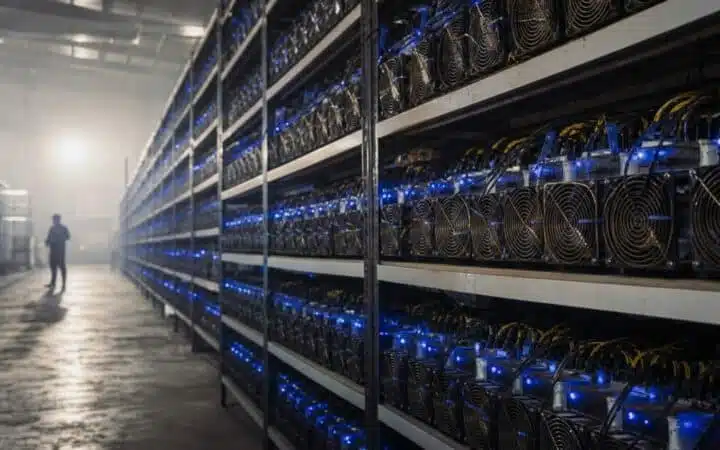
Le minage de Bitcoin utilise du matériel spécialisé (ASIC) pour résoudre des problèmes mathématiques complexes qui valident les transactions et ajoutent de nouveaux blocs à la blockchain. Les mineurs reçoivent des BTC nouvellement émis et des frais de transaction en récompense.

Gardez une longueur d'avance — recevez nos analyses crypto quotidiennes

En cliquant sur S'inscrire, vous acceptez notre Politique de confidentialité.